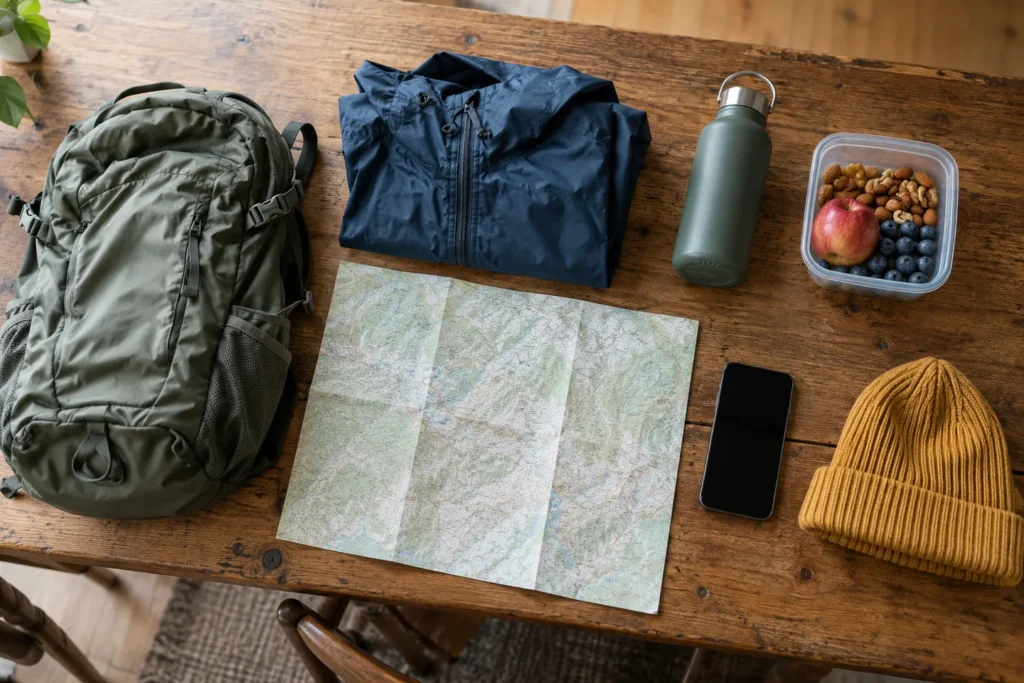
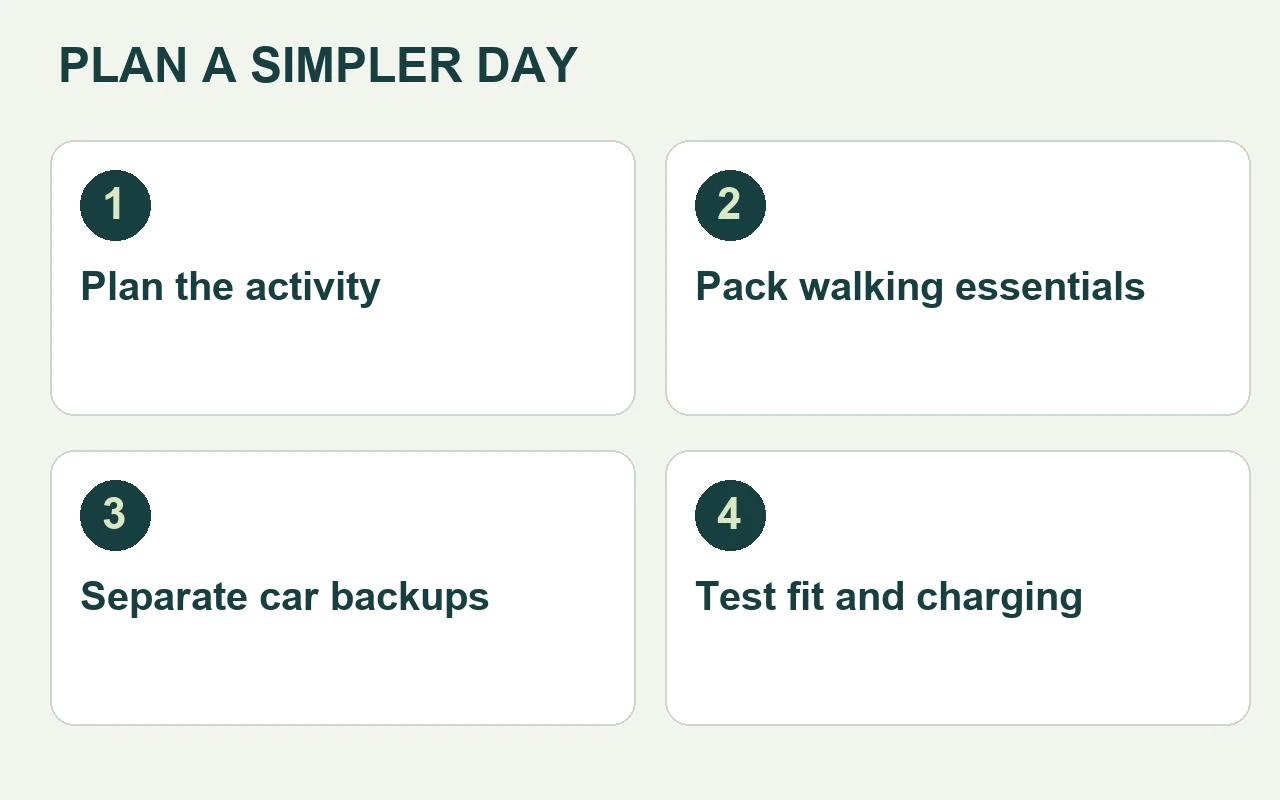
A useful packing list starts with what you will do after parking. Keep the walking essentials in one small bag, store vehicle backups separately and avoid buying equipment for an outing that does not need it.
Divide the trip into two bags
Think in terms of a walking bag and a vehicle reserve. Water left in the trunk cannot help halfway through a walk. Equally, carrying every spare item from the car makes a short town visit unnecessarily awkward.
Start with your route, the forecast and the needs of your group. An urban Harrisburg day trip and a longer park walk do not call for exactly the same equipment.
Put the essentials within reach
| Walking bag | Vehicle reserve | Check before leaving |
|---|---|---|
| Water and a snack | Extra supplies appropriate to the route | Fill and close containers |
| Map and charged phone | Charging cable and suitable adapter | Save addresses and maps |
| Weather layer | Dry clothes and spare footwear | Read the full forecast |
| Personal essentials | Items specific to your vehicle and party | Check quantity and access |
For a hike, the National Park Service’s Ten Essentials framework is a useful broader starting point. Adapt navigation, illumination, weather protection, food, water and other emergency supplies to the outing. This short road-trip list is not a complete wilderness kit.
Choose containers that fit the way you travel
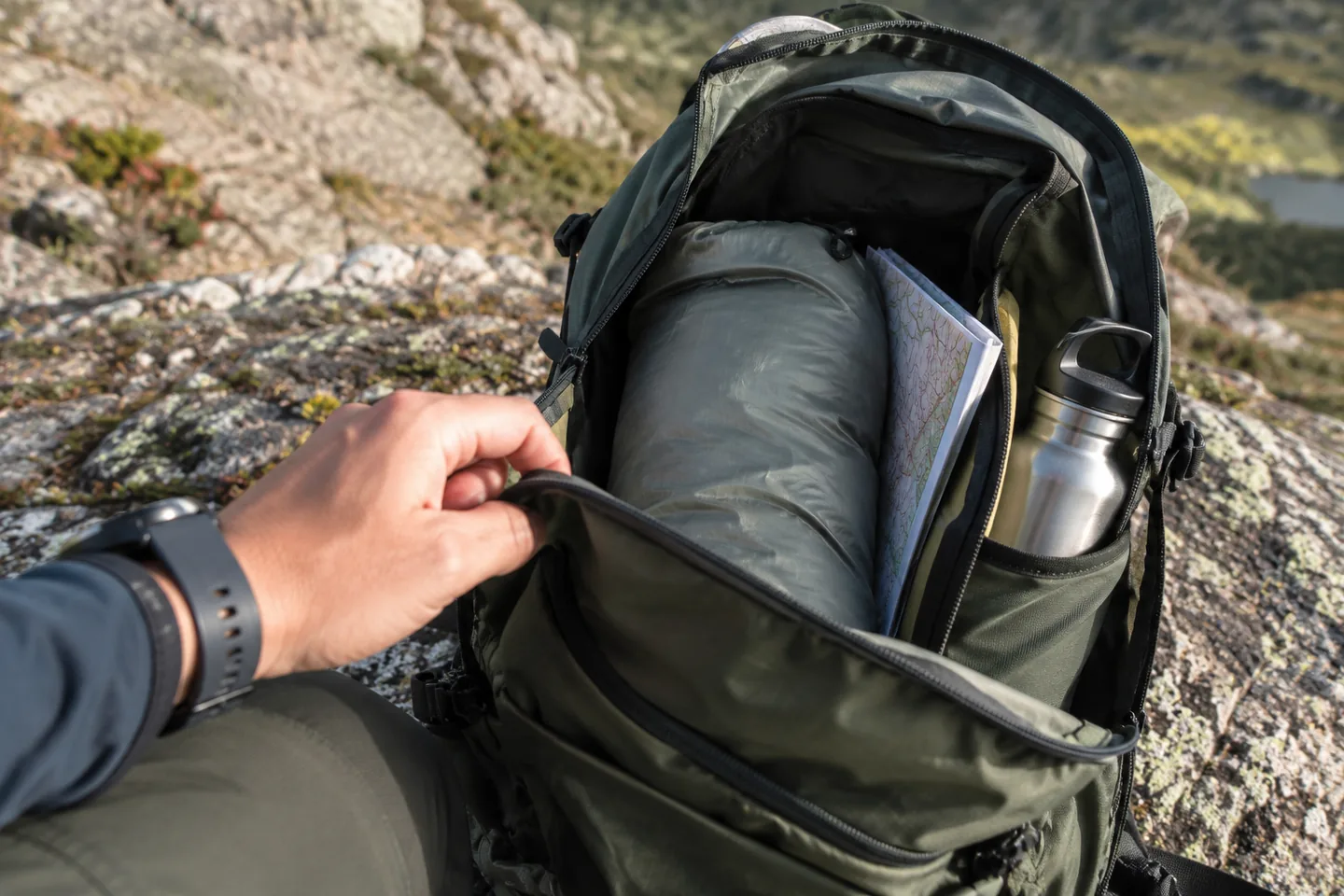
Try your filled bottle in the pack pocket and vehicle holder. Check the lid closes properly before carrying it beside electronics. Insulated and single-wall bottles answer different needs; the heaviest bottle is not always the best choice.
If carrying chilled food, consider the size of the meal, the journey and the cooling medium together. A manufacturer’s can capacity is not the same as space for food plus ice. A soft cooler needs enough usable space for both.
Reduce duplicates before buying anything
Lay everything out and remove items serving the same purpose unless a backup is justified. Check what you already own. A familiar bag that fits correctly can be a better choice than a new pack ordered solely for one short outing.
- Load the pack and try it on with your planned clothing.
- Check your phone cable fits the actual connector.
- Keep documents and spare layers protected from leaks.
- Make the most-used items accessible without unpacking lunch.
The right kit is equipment you can find, carry and use when you need it.
Do one last check at the door
Confirm the destination, opening conditions, weather, fuel or charge and a realistic return time. Tell someone the plan when appropriate. Add personal medication and supplies according to your own needs; do not assume a generic list has covered them.
A wet-weather plan can shorten the route before a long drive becomes necessary. This checklist is editorial planning advice, reviewed October 25, 2026, rather than a mechanical inspection or a complete emergency assessment.
Mini FAQ
How much water should everyone carry?
The amount depends on duration, weather, exertion and personal needs. Plan before leaving and do not assume every tap or water source will be available.
Do I need new specialist gear for a town visit?
Often not. Start with comfortable items you own, a workable bag and the essentials for the forecast and activity.
Can a power bank replace downloaded maps?
No. Backup power and offline navigation address different problems. Test both before relying on them.