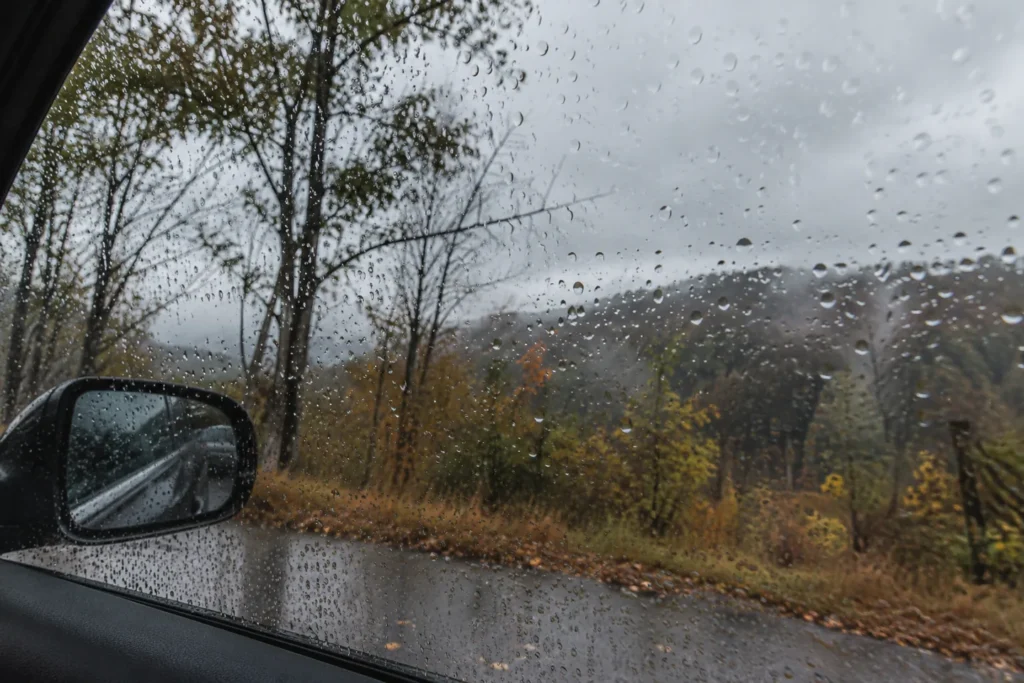
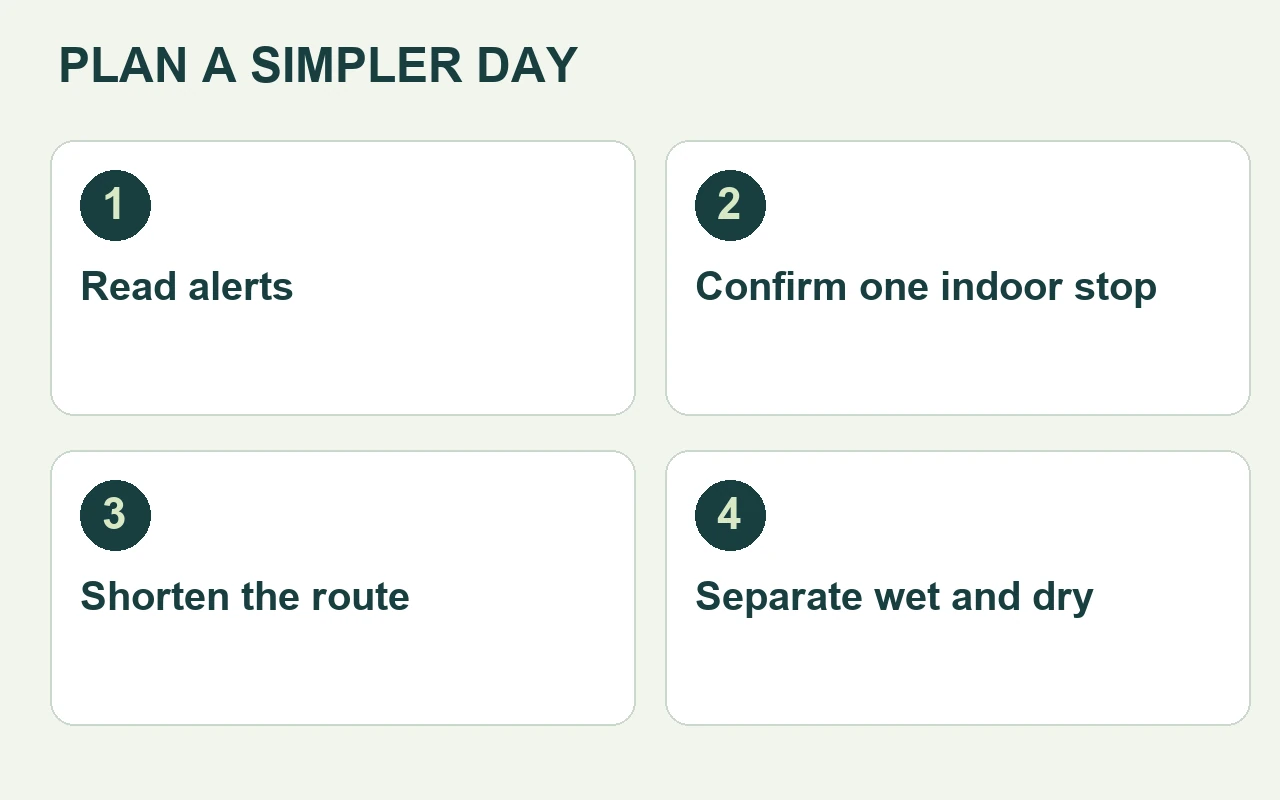
A wet forecast does not require filling the day with extra driving. Rebuild the outing around one reliable indoor stop, a shorter route and the option to postpone when conditions make travel unwise.
Separate light rain from a travel problem
Look at the forecast for the full route and the hours you will be out, not just the icon over your accommodation. Official weather alerts and road closures take priority over a day-trip plan. Never drive through floodwater or around a barrier.
Make the decision before departure. If the destination itself is closed, a waterproof jacket cannot solve the problem. If the weather is only inconvenient, a shorter walk close to shelter may still fit the day.
Confirm an indoor anchor
Choose one venue and check its actual opening day, entry conditions and reservation requirements. Indoor does not mean available without notice. A Harrisburg Capitol visit needs a separate access check and a suitable bag.
Keep one nearby meal option and avoid scheduling several timed entries. Wet clothes, parking and slower traffic make tight connections harder. A free cancellation option or a later visit can be more useful than buying an additional ticket.
Reconsider the walking surface
A trail that sounds easy on a dry day may be muddy or slippery after rain. Read the current trail description and park notices, shorten the walk where needed, and return before clothing and energy are exhausted. Stay on permitted routes rather than widening muddy sections into surrounding vegetation.
Change the activity when the conditions change, not just the clothing.
At Pinchot Lake, shorter connectors differ substantially from the complete lake loop. It is a useful reminder that a familiar place name does not define the difficulty of a walk.
Organise dry and wet equipment
| Where | What belongs there | Reason |
|---|---|---|
| Daypack | Rain layer, water, map, essentials | Available away from the vehicle |
| Protected pouch | Phone, spare layer, documents | Separate from damp equipment |
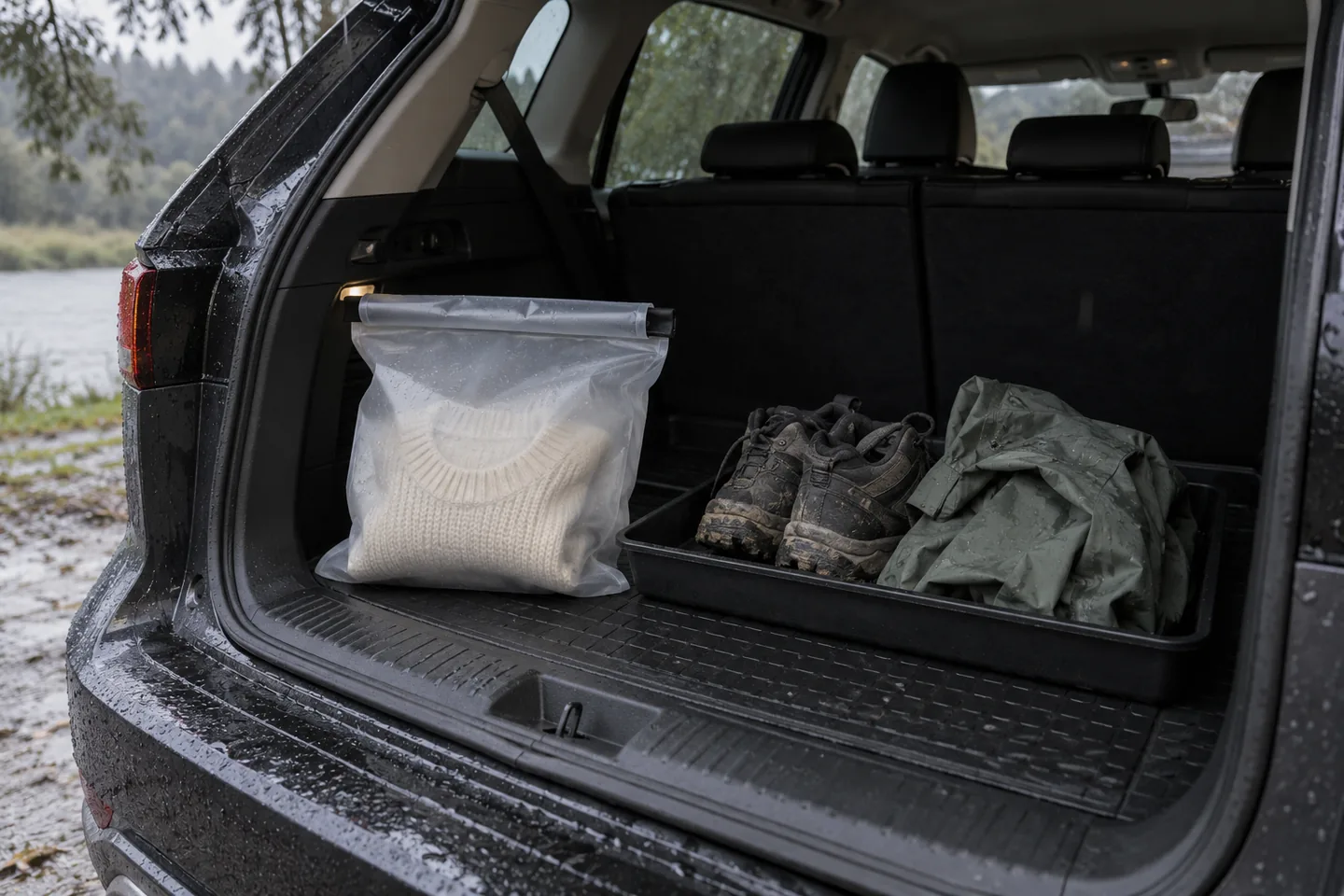
| Vehicle | Towel, dry bag, spare footwear | Contain water and mud on return |
A pack cover does not protect every opening. Use an appropriate internal bag for items that must remain dry. Different daypack layouts suit different loads; check your own equipment before buying more.
Make the return drive part of the plan
PennDOT highlights wet leaves, fog and glare as seasonal hazards. Allow time for slower travel, put the route into navigation while parked and do not rely on a phone that is almost empty. A USB-C power bank supplies backup phone power; it does not provide roadside rescue.
Keep visibility and comfort under review throughout the day. This guide is a general planning framework, checked October 25, 2026, and cannot assess live road or weather conditions.
Mini FAQ
Is a rain jacket enough to make any trail suitable?
No. Closures, water levels, footing and your group’s ability matter independently of clothing.
Should I replace every cancelled outdoor stop?
No. One confirmed indoor visit and a shorter day may work better than a series of rushed alternatives.
What should I do if a road is flooded?
Do not enter floodwater or bypass a closure. Turn around safely and follow official instructions and permitted alternatives.