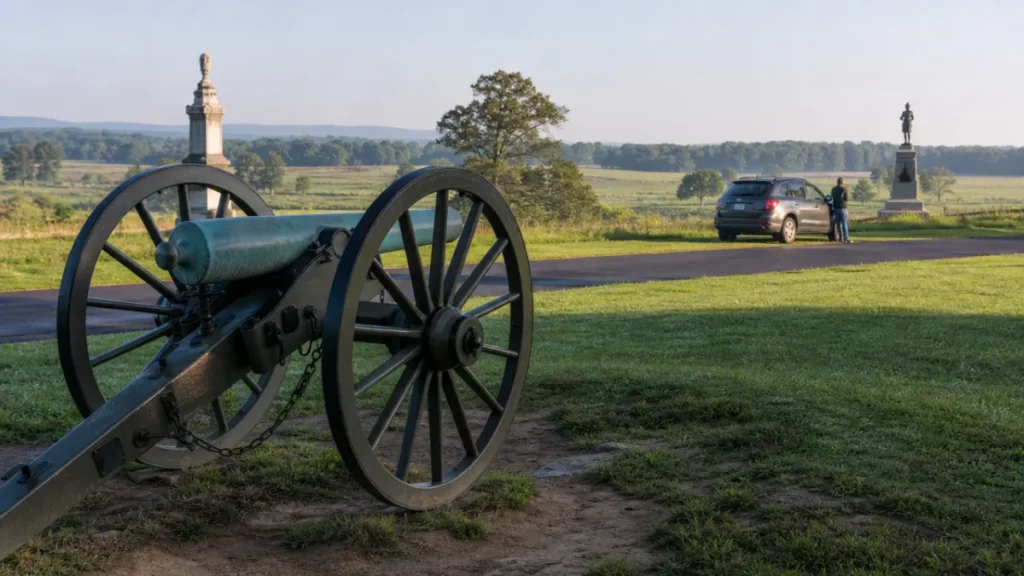
A Gettysburg day trip from the Harrisburg area combines a manageable drive with one of Pennsylvania’s most significant historic landscapes. The key is to start early, choose a touring format before arrival, and avoid trying to see every monument in a single visit.
For most starting points around Harrisburg, allowing about an hour of travel in each direction is a sensible baseline. Actual driving time depends on your location, traffic, weather, and roadwork, so check live directions before leaving.
A rewarding first visit is about understanding the battlefield, not checking every landmark off a list.
Start at the museum and visitor center
The Gettysburg National Military Park Museum and Visitor Center is the most practical starting point for a first visit. It provides orientation, current park information, maps, exhibits, and access to ticketed experiences.
The battlefield grounds generally do not require a park entrance fee. Museum exhibits, the film, the Cyclorama presentation, guided tours, and commercial bus tours may carry separate charges. Hours, prices, and available programs can change, so verify them before your trip.
The Battle of Gettysburg took place from July 1 through July 3, 1863. President Abraham Lincoln delivered the Gettysburg Address at the dedication of the Soldiers’ National Cemetery later that year, on November 19. Visiting the museum first provides context for the landscape you will encounter during the rest of the day.
How to get to Gettysburg from the Harrisburg area
US Route 15 is the principal north–south connection between the Harrisburg region and Gettysburg. The route is relatively direct, but your starting point may add local-road travel before you reach it.
- Travel-time allowance: Budget approximately 45 to 75 minutes each way rather than planning around the fastest possible estimate.
- Morning departure: Leave early enough to arrive near the visitor center’s opening time.
- Fuel: Fill up before beginning the battlefield route so you do not have to interrupt the tour.
- Navigation: Enter the museum and visitor center as your first destination, not simply “Gettysburg.”
- Road conditions: Review traffic, weather, construction, and park alerts before departure.
Choose the right battlefield experience
Gettysburg is too large and complex to understand from a single overlook. Select one primary touring method and leave some unstructured time for the stops that interest you most.
| Touring option | Best for | Suggested time | Planning note |
|---|---|---|---|
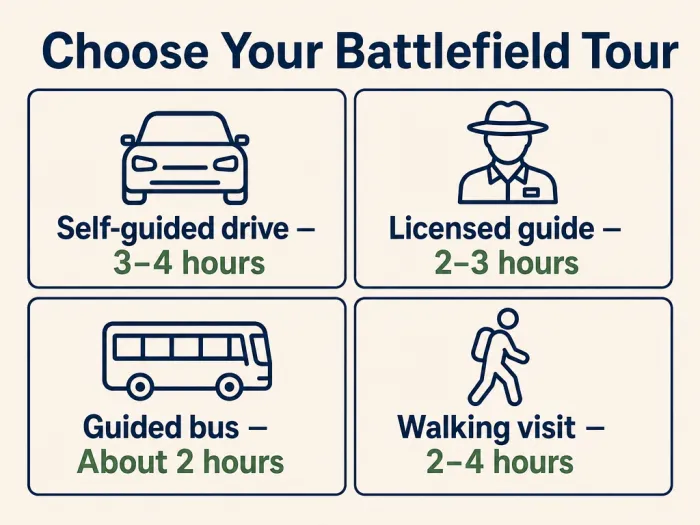
| Self-guided driving tour | Flexible schedules and repeat visitors | 3–4 hours | Download maps or digital material before arrival. |
| Licensed battlefield guide | First-time visitors seeking detailed interpretation | About 2–3 hours | Advance reservations are advisable during busy periods. |
| Guided bus tour | Visitors who prefer not to drive the battlefield | About 2 hours | Confirm departure time and accessibility when booking. |
| Walking-focused visit | Travelers concentrating on one battlefield area | 2–4 hours | Distances, uneven terrain, heat, and limited shade matter. |
Self-guided touring
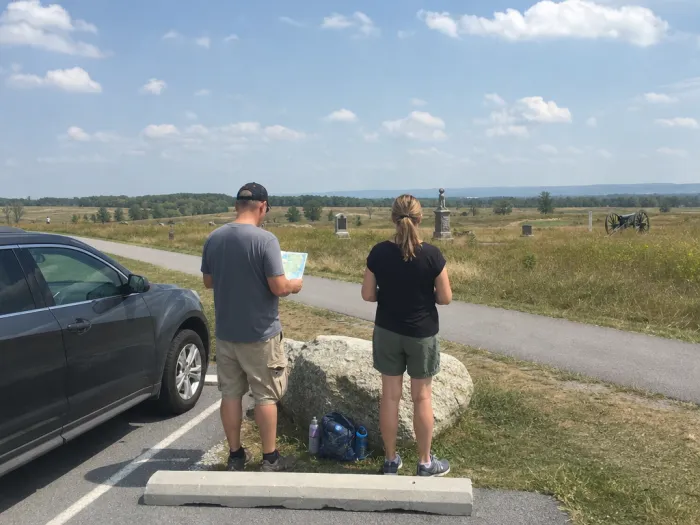
A self-guided drive offers the most flexibility. Follow the marked battlefield route and use a current park map or downloaded digital material for interpretation. Download anything you need in advance rather than relying on a consistent mobile signal.
Touring with a licensed guide
A licensed battlefield guide can provide a structured account of the battle and explain how the terrain shaped events. Depending on the selected service, a guide may accompany visitors in their vehicle or lead another type of scheduled tour. Confirm arrangements, vehicle capacity, duration, and price when reserving.
Taking a bus tour
A guided bus tour reduces the demands of navigating, finding pull-offs, and keeping track of the route. It can be useful for a first visit or for a group with different walking abilities. The trade-off is a fixed schedule and less time at individual locations.
A realistic full-day Gettysburg itinerary
This sample schedule favors understanding over speed. Adjust it to current operating hours, road conditions, and your starting point in the Harrisburg area.
7:30 a.m.: Leave the Harrisburg area
An early departure provides a buffer for traffic and can make parking easier. Bring water, snacks, and weather-appropriate clothing in the vehicle.
8:30–10:00 a.m.: Visitor center orientation
Collect a map, ask about closures, and confirm the day’s programs. If you plan to see the museum, film, or Cyclorama, allowing 60 to 90 minutes creates a useful foundation without consuming the entire morning.
10:00 a.m.–12:30 p.m.: Begin the battlefield route
Start with the areas associated with the first day of battle, including the ridges west and north of town. Rather than stopping at every marker, select a few locations where you can get out, read the interpretation, and study the terrain.
12:30–1:30 p.m.: Take a proper lunch break
Plan lunch instead of hoping to find food beside the next battlefield stop. Options include bringing a packed meal or leaving the park route for a restaurant in the Gettysburg area. Observe all posted rules if eating on park property, and take all waste with you.
1:30–4:00 p.m.: Explore the southern and central battlefield
Continue toward prominent locations such as Little Round Top, Devil’s Den, the Wheatfield, the Peach Orchard, and Cemetery Ridge, subject to current access and closures. These places are close on a map but can require substantial time once parking, walking, and interpretation are included.
Two or three thoughtful stops usually provide a better experience than rushing through a long list.
4:00–5:00 p.m.: Visit the National Cemetery
End the historical portion of the day at the Soldiers’ National Cemetery if time and conditions permit. Keep voices low, remain on designated paths, and remember that this is both a historic site and a burial ground.
After 5:00 p.m.: Return or make a brief downtown stop
If everyone still has energy, allow a limited amount of time for downtown Gettysburg. Treat this as optional rather than squeezing it into an already crowded schedule. Check parking signs carefully and preserve enough daylight and attention for the return drive.
What to prioritize on a shorter visit
If you have only half a day, do not attempt the complete battlefield route. A focused visit could include:
- Orientation at the visitor center;
- One interpretive experience, such as the museum or a guided tour;
- A small number of battlefield stops representing different phases of the battle;
- The Soldiers’ National Cemetery, if time allows.
Downtown shopping and an extended restaurant meal are best saved for a separate visit when the historical sites are your priority.
What to pack for the day
Much of the battlefield is open and exposed. Conditions can change quickly, and shade is limited in some areas. A broader Pennsylvania road-trip packing checklist can help with preparation.
- Refillable water bottles for every traveler;
- Comfortable closed-toe walking shoes;
- Sun protection, including sunscreen, a hat, and sunglasses;
- A light rain layer or compact umbrella when showers are possible;
- Seasonal layers, especially in spring and autumn;
- Phone charger or power bank;
- Downloaded maps and reservation confirmations;
- Snacks, a packed lunch, or a small soft cooler;
- Necessary medication and basic personal supplies;
- Binoculars for studying distant terrain and monuments.
A compact daypack is generally more convenient than repeatedly returning to the car, but valuables should never be left visible in a parked vehicle.
Driving, walking, and respectful conduct
Battlefield roads may include narrow sections, one-way segments, cyclists, pedestrians, tour buses, and vehicles slowing for unfamiliar turns. Follow posted speeds and stop only in designated parking areas or pull-offs. Do not block traffic to take photographs.
Stay on established paths where directed, respect fences and private property, and never climb monuments or remove objects. Gettysburg is a commemorative landscape where thousands of people were killed, wounded, or captured.
A quiet, attentive, and respectful visit is appropriate throughout the battlefield and cemetery.
Visitors with mobility concerns should review current accessibility information before leaving home. The visitor center and many major locations can be approached by vehicle, but trails, fields, slopes, and historic surfaces vary considerably.
Seasonal planning from Harrisburg
Spring
Spring can offer comfortable walking temperatures, but rain, mud, and rapid weather changes are possible. Carry a waterproof layer and check for temporary access restrictions. A rainy-day Pennsylvania road trip plan can provide useful alternatives if conditions deteriorate.
Summer
Expect heat, humidity, strong sun, and larger crowds, particularly around commemorative dates and holiday weekends. Begin outdoor touring early and drink water regularly.
Autumn
Cooler temperatures can make walking pleasant, while weekends may bring heavier recreational traffic. Shorter daylight hours become an important consideration later in the season. Account for foliage traffic when making Pennsylvania fall road-trip plans.
Winter
Winter can provide a quieter experience, but snow, ice, wind, abbreviated operating schedules, and road closures may affect plans. Keep the itinerary flexible and prioritize safe driving.
Pre-departure checklist
- Confirm the museum and visitor center’s current hours.
- Review park alerts, weather, traffic, and road conditions.
- Reserve a guide, bus tour, or ticketed experience if desired.
- Download maps and confirmations for offline access.
- Choose three to five priority locations rather than an exhaustive list.
- Plan lunch and carry enough water.
- Check sunset time and expected return traffic.
- Tell everyone in the group how much walking to expect.
- Leave room in the schedule for closures and unplanned stops.
Travelers building a longer stay can combine Gettysburg with a separate Harrisburg riverfront day trip or a nature-focused Gifford Pinchot State Park day trip, rather than overcrowding one itinerary.
Mini FAQ
Can Gettysburg be visited as a day trip from Harrisburg?
Yes. For most travelers in the Harrisburg area, the distance allows enough time for a substantial battlefield visit and a same-day return. An early start is important if you want to combine the visitor center, battlefield, and cemetery.
How much time should a first-time visitor spend at Gettysburg?
A full day is appropriate for an introductory visit. Allow at least four to six hours on site, excluding the drive. Visitors with a strong interest in military history may prefer two days.
Is the Gettysburg battlefield free?
The national military park generally does not charge an entrance fee for access to the battlefield grounds. Museum experiences and guided or commercial tours may require paid tickets. Verify current prices and access details before departure.
Can I drive through the battlefield in my own car?
Yes, subject to current road conditions and closures. A marked route connects major areas, with designated places to park and explore on foot. Some roads may be one-way or temporarily inaccessible.
Should I visit downtown Gettysburg on the same day?
You can, but it should be treated as an optional addition. First-time visitors often underestimate how long the battlefield and museum take. Prioritize the historical sites, then decide whether your group has enough time and energy for downtown.
Is Gettysburg suitable for children?
It can be, particularly when the day includes short stops, breaks, food, and age-appropriate explanations. Avoid an uninterrupted multi-hour drive through the battlefield. The subject includes death and warfare, so adults should present it thoughtfully.