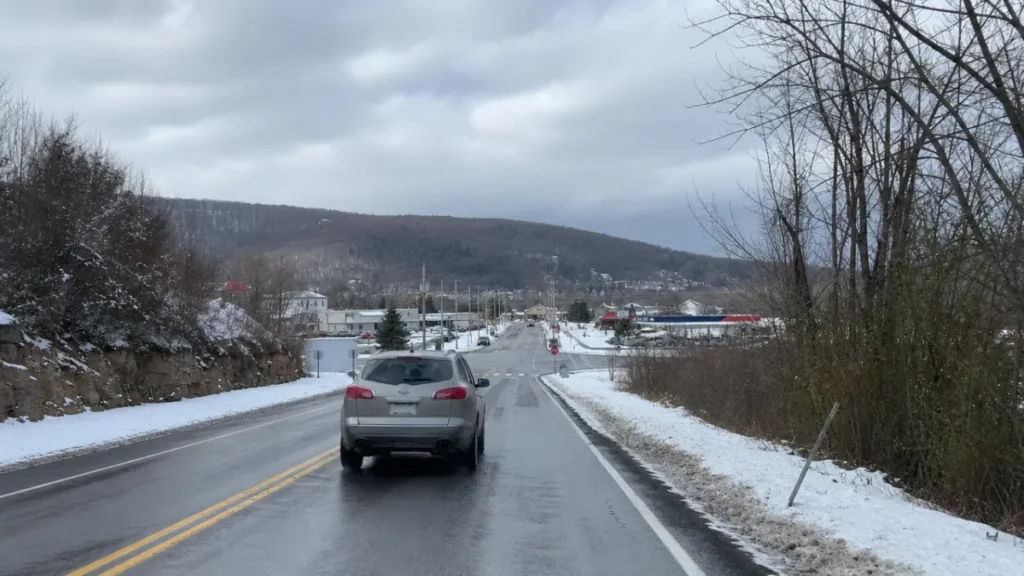
A Pennsylvania winter road trip rarely unfolds exactly as planned. Conditions can change between valleys, ridges, cities, and the snowier northwestern counties. A route that looks simple in the morning may require more time after a snow shower, an early sunset, or a temporary attraction closure.
The answer is not to avoid planning. It is to build a flexible winter itinerary that can bend without falling apart. By choosing a few priority stops, adding realistic buffers, and preparing indoor alternatives, you can make decisions based on the conditions you actually encounter.
The flexible-itinerary rule: commit to the experience you want, not to every stop on a fixed schedule. In winter, arriving safely matters more than completing the original list.
Why a Pennsylvania winter itinerary needs flexibility
Pennsylvania’s size and varied terrain make winter travel difficult to summarize with one forecast. Conditions near Philadelphia may differ substantially from those along Interstate 80, in the Laurel Highlands, or near Lake Erie. Elevation, wind, lake-effect snow, and shaded rural roads can all influence a journey.
Winter also reduces the usable travel day. Darkness arrives early, outdoor attractions may operate on limited schedules, and scenic roads can take longer to navigate. Even when highways are clear, parking areas, sidewalks, trailheads, and secondary roads may remain snowy or icy.
A resilient plan accounts for four variables:
- Road conditions: snow, freezing rain, ice, fog, wind, and road-treatment operations.
- Daylight: less time for scenic drives, outdoor walks, and unfamiliar rural roads.
- Operating schedules: seasonal hours, weather closures, and reduced weekday service.
- Personal comfort: the driver’s experience, the vehicle’s condition, and each traveler’s tolerance for cold or uncertainty.
Start with three itinerary layers
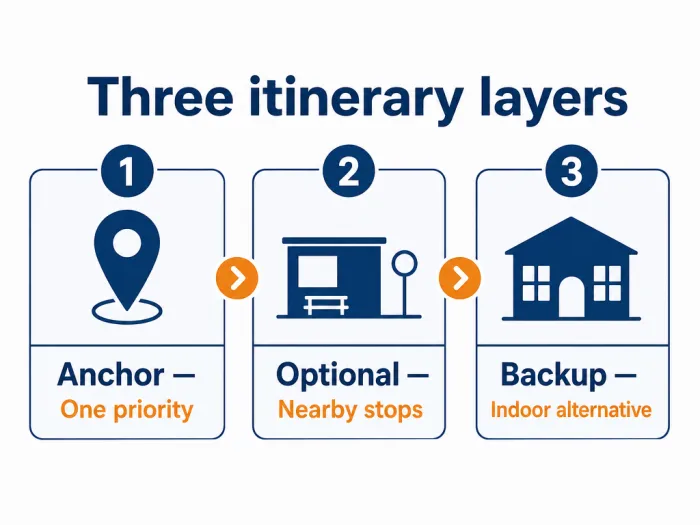
Instead of creating one rigid schedule, organize the trip into three layers. This provides a clear priority order when weather or timing forces a change.
Layer 1: one anchor experience per day
An anchor experience is the main reason for that day’s journey. It might be a museum, a historic district, a family visit, a short park walk, or a reserved meal. Choose only one anchor when difficult weather is possible.
Confirm its winter hours directly with the venue before leaving. If it requires timed admission, leave enough room around the reservation to avoid rushing on slippery roads.
Layer 2: optional stops near the main route
Add two or three secondary stops that require little or no detour. Treat them as opportunities rather than obligations. A café, covered market, antique shop, or short downtown walk can fill extra time without controlling the day.
Layer 3: weather-proof alternatives
Every day should have at least one indoor alternative. Museums, galleries, conservatories, historic buildings, shops, and relaxed meals can preserve the trip when an outdoor plan no longer makes sense.
Keep alternatives in the same general area. A backup located an hour away may introduce more driving precisely when you are trying to reduce road exposure. A rainy-day Pennsylvania road trip can provide complementary indoor ideas.
Choose a route that leaves room to change course
A flexible road trip is easier when the route connects towns with services rather than depending on long, isolated stretches. Major roads are not immune to winter disruption, but they generally offer more opportunities to stop for fuel, food, lodging, or a safe break.
Use a hub-and-spoke itinerary
For many winter travelers, staying two nights in one location is more practical than changing accommodations every evening. From that base, take shorter day trips and return before conditions deteriorate or daylight disappears.
This hub-and-spoke itinerary offers several advantages:
- You can choose the day’s direction after checking the forecast.
- You avoid packing and unpacking every morning.
- You can shorten an outing without losing the next hotel reservation.
- You gain a familiar place to return to after driving in cold or wet conditions.
Identify decision points before departure
Mark places where you can safely shorten the route, return to your base, or continue toward the next stop. A useful decision point might be a town with fuel and food, a highway interchange, or the last major community before a rural section.
Set a personal turnaround time as well. For example, decide that if you have not reached the day’s anchor by early afternoon, you will switch to a closer alternative rather than drive unfamiliar roads after dark.
Avoid stacking distant reservations
Two prepaid activities in different towns can turn a pleasant drive into a race against time. If reservations are necessary, keep them geographically close or place them on different days. Review cancellation and rebooking policies before paying.
Build weather and daylight buffers into each day
A winter itinerary should contain intentionally unassigned time. Do not calculate the day using only the estimated driving time shown under ideal conditions. Add room for slower traffic, visibility changes, rest breaks, snow removal, and finding a safe parking space.
| Planning element | Rigid approach | Flexible winter approach |
|---|---|---|
| Daily priorities | Several must-see stops | One anchor plus optional stops |
| Driving estimate | Navigation time only | Navigation time plus a substantial buffer |
| Overnight stays | A new hotel every night | A two-night base when practical |
| Outdoor plans | Fixed regardless of conditions | Paired with a nearby indoor alternative |
| Evening arrival | After a full sightseeing day | Before dark when conditions are uncertain |
When snow or ice is expected, the correct buffer cannot be reduced to a universal number of minutes. The safest choice may be to delay departure, remove a stop, use a different route, or stay where you are. Forecasts, official road reports, and local restrictions should guide the decision.
A sample three-day flexible framework
This framework can be adapted to different parts of Pennsylvania. It deliberately avoids a minute-by-minute schedule.
Day 1: arrive and stay local
- Anchor: reach your accommodation during daylight.
- Optional: take a short walk through the nearest town or have an early dinner.
- Backup: remain at the accommodation if conditions worsen.
- Evening task: check the next day’s forecast, road conditions, and venue notices.
Day 2: take the main day trip
- Anchor: visit one priority attraction or destination.
- Optional: add a nearby scenic stop if roads, daylight, and parking conditions are suitable.
- Backup: choose an indoor attraction or a relaxed local meal.
- Decision point: reassess conditions around midday and return early if needed.
Day 3: keep departure day light
- Anchor: travel home or to the next overnight location.
- Optional: make one short stop close to the route.
- Backup: skip sightseeing and use the available daylight for travel.
Travelers using south-central Pennsylvania as a base can consider a Harrisburg riverfront day trip, Gifford Pinchot State Park, or a day in Lewisberry. Verify current access, operating hours, and weather conditions before setting out.
Check weather and road conditions repeatedly
Review conditions once when planning, again the evening before travel, and once more shortly before departure. Forecasts and road reports are useful when they influence your choices rather than simply confirming a fixed plan.
- Weather forecasts: review local forecasts, watches, warnings, and expected timing.
- Road reports: check traffic conditions, incidents, restrictions, and closures.
- Traffic cameras: use recent images to supplement, not replace, official warnings.
- Park and attraction notices: confirm access, seasonal hours, parking, and facility availability.
Do not interact with a phone while driving. Ask a passenger to monitor updates or pull into a safe location before reviewing information or changing the route.
Prepare the vehicle and pack for an unplanned delay
All-wheel drive or four-wheel drive can help a vehicle move in some conditions, but it does not eliminate slippery surfaces or shorten every stopping distance. Vehicle condition, appropriate tires, lower speeds, greater following distance, and cautious decisions remain important.
Before leaving, check the vehicle according to its manufacturer’s guidance and address concerns with a qualified professional. Pay particular attention to tires, battery condition, lights, windshield wipers, washer fluid, brakes, and fuel or charge level.
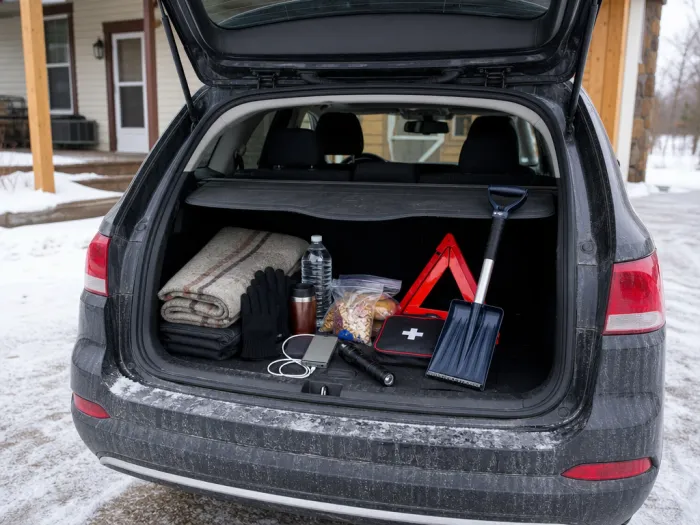
Winter road trip checklist
- Warm coats, gloves, hats, dry socks, and sturdy footwear
- Blankets or emergency thermal blankets
- Water and shelf-stable snacks
- Ice scraper and snow brush
- Flashlight or headlamp with spare batteries
- Phone charging cable and charged power bank
- First-aid supplies and necessary medications
- Reflective warning equipment
- Paper notes containing key addresses and contact numbers
- Small shovel and traction aid appropriate for the vehicle
- Roadside-assistance and insurance information
- Extra windshield washer fluid suitable for winter conditions
Adapt the list to the route, vehicle, passengers, and forecast. A longer rural journey may require more preparation than a short trip between well-served towns. The Pennsylvania road trip packing checklist can help organize essential gear, while a suitable power bank can support your emergency charging plan.
Make lodging and reservations easier to change
Flexibility depends partly on the terms attached to your bookings. Before reserving a room or activity, note the cancellation deadline, change fees, check-in window, and procedure for a late arrival.
If a storm is possible, contact the accommodation directly rather than assuming that an online booking platform reflects every available option. Ask where to find weather-related updates and whether parking arrangements change after snowfall.
Keep confirmation numbers and direct phone numbers in one place. Download or write down essential information in case mobile service is weak. If safety requires a change, communicate with the property as early as practical.
Know when to shorten, postpone, or stop the trip
A good itinerary includes clear reasons to change plans. Consider postponing departure, stopping early, or staying overnight when official warnings advise against travel, visibility is poor, freezing precipitation is occurring, roads are deteriorating, or the driver feels tired or uncomfortable.
Never continue merely because a reservation has been paid for. The cost and inconvenience of changing plans are secondary to the safety of travelers and road crews.
If conditions become hazardous while you are driving, seek a safe place to stop rather than parking in a travel lane or on an unsafe shoulder.
Quick morning decision check
- Are warnings or travel restrictions in effect?
- What do road cameras and incident reports show?
- Can the route be completed with adequate daylight?
- Are the anchor destination and parking area open?
- Is every driver rested and comfortable with the conditions?
- Where is the easiest place to turn back or stop overnight?
Mini FAQ
How many stops should a winter road trip include each day?
Start with one priority experience and a small number of nearby optional stops. The appropriate total depends on road conditions, distance, daylight, and the travelers involved. Avoid treating optional stops as requirements.
Should I book every hotel in advance?
Booking ahead can provide certainty, especially on busy weekends, but review cancellation and modification terms carefully. A hub-and-spoke plan with two nights in one place often creates more flexibility than a different hotel every night.
Are Pennsylvania state parks open during winter?
Access, facilities, services, and activity availability vary by park and conditions. Check the individual park’s current notices before traveling. Do not assume that roads, restrooms, parking areas, or trails have the same winter access as they do in summer.
What is the best time to drive in winter?
There is no universally safe time. Daylight can improve visibility and make navigation easier, but current and forecast conditions matter more than the clock. Avoid driving during hazardous conditions and follow official warnings or restrictions.
What should I do if the forecast changes during the trip?
Return to the itinerary’s priority layers. Keep the anchor only if it remains sensible, remove optional stops, switch to a nearby indoor alternative, or add an overnight stay. Recheck road and weather information before continuing.