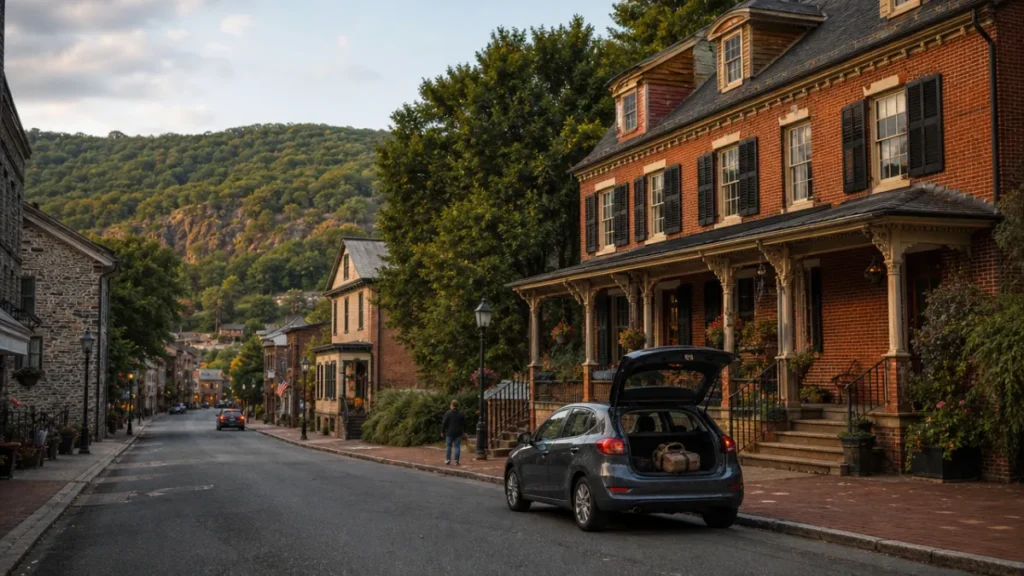
A successful Pennsylvania weekend often depends less on how many attractions you save and more on where you stay. A historic town puts restaurants, architecture, and evening walks close at hand. A state park base trades that convenience for trails, water, wildlife, and quieter mornings.
The right choice comes down to your preferred pace, evening plans, lodging style, and tolerance for driving. Here is a practical way to choose without turning a two-night escape into an overpacked road trip.
The short answer: choose the experience you want after 5 p.m.
Daytime plans can overlap from either base. You can drive from town to a trail or leave the park for a museum and dinner. The biggest difference often appears at the beginning and end of the day.
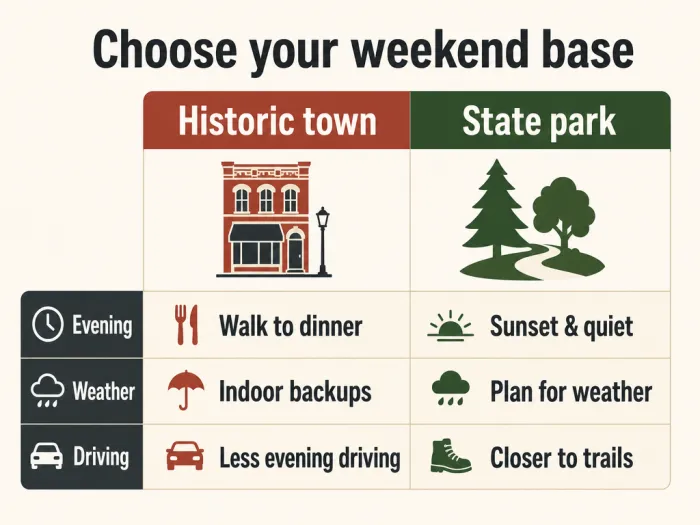
- Choose a historic town if you want to walk to dinner, browse local streets, keep rainy-day options nearby, or enjoy an evening without another drive.
- Choose a state park base if you want early trail access, outdoor meals, darker and quieter nights, or a weekend centered on hiking, paddling, fishing, or wildlife watching.
- Choose a hybrid base near both if your group is divided. In south-central Pennsylvania, the Lewisberry area can support outings toward Gifford Pinchot State Park while keeping regional towns within driving distance.
Neither option is inherently better. The most useful base is the one that removes friction from the activities you value most.
Historic town vs. state park: a side-by-side comparison
| Planning factor | Historic town base | State park base |
|---|---|---|
| Best for | Dining, architecture, museums, shopping, and evening walks | Trails, water activities, wildlife, picnics, and quiet mornings |
| Typical daily rhythm | Slow breakfast, cultural stops, and dinner close to lodging | Early start, outdoor activity, and a simple evening near camp or lodging |
| Car use | Potentially limited once parked, depending on location | Often needed for supplies, meals, and access points |
| Weather flexibility | More indoor alternatives nearby | Requires better rain and temperature planning |
| Evening options | Restaurants, cafés, performances, or a walk | Camp meal, sunset, reading, stargazing, or an early night |
| Main trade-off | Less immediate access to nature | Fewer services and less spontaneity after outdoor plans end |
When a historic town makes the better weekend base
A town base works especially well when the lodging is part of the experience rather than simply a place to sleep. It also suits travelers who prefer to decide what to do after checking the weather.
You want a walkable evening
After a full day, being able to park once and walk to dinner can feel like a luxury. A central location may also let you explore architectural details, public spaces, and independent businesses without creating another itinerary.
Walkability varies by neighborhood, so check the exact lodging address rather than assuming an entire town can be explored on foot. Review the distance to restaurants, parking arrangements, street lighting, and expected closing times.
Your group has different interests
Historic towns give mixed-interest groups room to split up. One person can visit a museum or browse shops while another takes a short drive to a trail. This can be easier than asking everyone to commit to a full outdoor day.
The forecast is uncertain
Rain does not have to cancel a town-centered weekend. Indoor attractions, covered dining, and scenic drives can provide alternatives. If wet weather is likely, keep the schedule flexible and use this rainy-day Pennsylvania road trip to shape a backup plan.
You want to explore a regional center
York can work as an urban-historic stop for travelers interested in downtown streets and local institutions. The York walking stop can help you plan time on foot. Harrisburg, Gettysburg, and Lancaster can also fit town-oriented weekends, but each produces a different balance of history, dining, traffic, and access to the surrounding countryside.
When a state park makes the better base
A park-centered weekend is strongest when outdoor time is the main event rather than an activity squeezed between other stops. Staying in or near the landscape can make early starts easier and reduce the temptation to overfill the day.
You want to begin outdoors
Early hours can be cooler, quieter, and better suited to an unhurried walk. A nearby base also makes it practical to return for lunch, change wet clothing, or rest before a second short outing.
You are comfortable planning meals and supplies
Park weekends require more preparation. Food, drinking water, weather layers, navigation, and activity-specific equipment may need to be organized before arrival. Cell coverage, food service, and nearby shopping should not be assumed.
For a south-central Pennsylvania option, include Gifford Pinchot State Park in your planning. Confirm current hours, trail conditions, water access, reservations, and park rules through official channels before departure.
A quieter night matters more than nightlife
A park base is a good match when the ideal evening involves a simple meal, conversation, or an early bedtime. It is less suitable if the group expects several restaurant choices, entertainment, or late-night services within walking distance.
You accept that weather shapes the itinerary
Heat, storms, ice, and recent rainfall can change which activities are sensible. Build a park weekend around two or three possible outings instead of one rigid route.
If conditions deteriorate, be willing to shorten a trail, switch to a scenic drive, or spend part of the day in town.
How to evaluate the total amount of driving
A base can look central on a map while still producing an inconvenient weekend. Do not compare only the distance from home. Add the smaller drives that happen after arrival:
- Lodging to the first attraction each morning
- Trailhead or attraction to lunch
- Afternoon stop to dinner
- Dinner back to the lodging after dark
- Any return trip for forgotten supplies
A town may require a longer drive to a park but eliminate evening driving. A park base may shorten the morning journey while adding trips for meals and indoor attractions.
Estimate the full weekend’s driving rather than focusing on a single route.
For a two-night stay, choose one main destination per day and group secondary stops along the same corridor. If Gettysburg is under consideration, use this Gettysburg day trip as a starting point rather than adding the destination automatically.
A simple two-night itinerary for each base
Option A: the historic town weekend
- Friday: Check in, park, take a short orientation walk, and have dinner nearby.
- Saturday: Choose one major historical or cultural attraction, allow time for lunch, and leave the late afternoon unscheduled.
- Sunday: Visit a market, neighborhood, or nearby natural area before the drive home.
This plan preserves the town’s main advantage: variety without constant repacking and driving.
Option B: the state park weekend
- Friday: Arrive before dark when possible, organize equipment, and confirm the next morning’s starting point.
- Saturday: Complete the primary outdoor activity early, take a long midday break, and choose a shorter second outing.
- Sunday: Take an easy walk or scenic drive, then stop in a nearby community on the way home.
This approach leaves room for changing conditions and avoids making every park visit a test of endurance.
Option C: a hybrid Lewisberry-area weekend
- Friday: Settle in and keep the evening local.
- Saturday: Dedicate the day to Gifford Pinchot State Park or another outdoor destination.
- Sunday: Choose a town stop based on the direction of your return drive.
Travelers considering this balance can use a day in Lewisberry to organize nearby stops, then explore additional Pennsylvania road trips suited to their route.
Weekend-base checklist
Before booking, compare both options using the same questions:
- What is the one activity everyone considers essential?
- Would the group rather walk to dinner or wake up near a trail?
- How much driving feels reasonable after sunset?
- Are indoor alternatives important?
- Does the lodging provide the kitchen, parking, storage, and accessibility features required?
- Will anyone need reliable mobile service or internet access?
- Are park reservations, permits, or seasonal restrictions relevant?
- Where are the nearest fuel, food, and medical services?
- What is the cancellation or weather-change policy?
- Can the itinerary remain enjoyable if the main outdoor plan is unavailable?
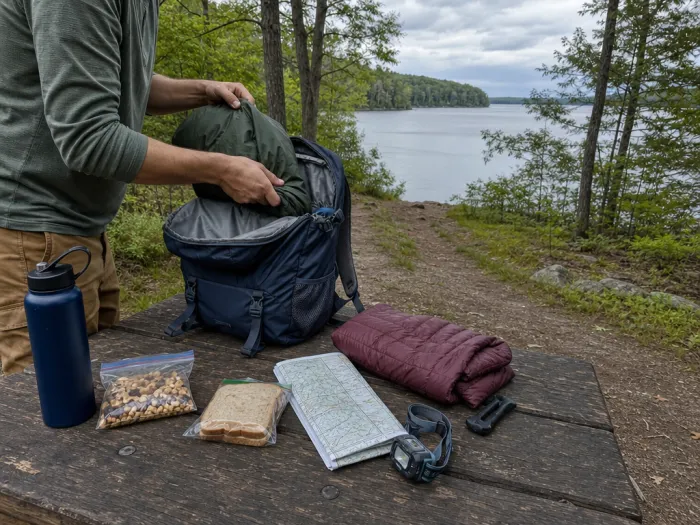
Keep equipment proportional to the itinerary. A short walk and a picnic do not require expedition-level gear. Begin with a Pennsylvania road trip packing checklist, then remove anything your actual plans do not require.
Common booking mistakes to avoid
Choosing by room price alone
A cheaper stay may create extra fuel costs, parking fees, meal expenses, or driving time. Compare the approximate total cost of the weekend, including cancellation terms and required equipment.
Assuming “near the park” means walkable
Nearby lodging may still require a drive to the appropriate entrance or activity area. Check the route to the exact trailhead, boat launch, beach, or visitor facility you intend to use.
Building the trip around too many towns
York, Harrisburg, Gettysburg, Hershey, and Lancaster may appear close enough to combine, but visiting several over one weekend can reduce each place to parking and departure times.
Select one anchor destination and treat everything else as optional.
Ignoring the return journey
Sunday’s stop should ideally follow the route home rather than force a major detour. This keeps the final day enjoyable and reduces the pressure to leave early.
Mini FAQ
Is a historic town better for a first Pennsylvania weekend?
It can be easier for first-time visitors because dining, indoor activities, and services are often closer together. However, travelers whose main goal is hiking or time by the water may find a state park base more satisfying.
Can I combine a town and a state park in two days?
Yes. Give each day one clear focus and avoid adding multiple distant attractions. A park day followed by a town morning usually feels more relaxed than switching settings several times in one day.
Should I stay inside a state park or merely nearby?
Staying inside can maximize outdoor time, while nearby lodging may offer more comfort, dining choices, or flexible booking. Availability and accommodation types vary, so verify current options and rules through official reservation channels.
Which base is better for families?
That depends on routines and interests. Towns can simplify meals and bad-weather changes, while parks provide space and direct access to outdoor activities. Families should also compare bathroom access, kitchen facilities, trail difficulty, and driving time.
Which option is better in fall?
Both can work well. A park emphasizes foliage and outdoor time, while a town can combine seasonal scenery with indoor stops and dining. Popular weekends may require earlier lodging and activity planning. A flexible Pennsylvania fall road trip can help balance seasonal stops and travel time.
What should I verify immediately before departure?
Check the weather, lodging instructions, road conditions, park notices, attraction hours, reservations, and restaurant availability. Use official park and attraction channels for current operating information.